
Shakespeare and the Groundlings
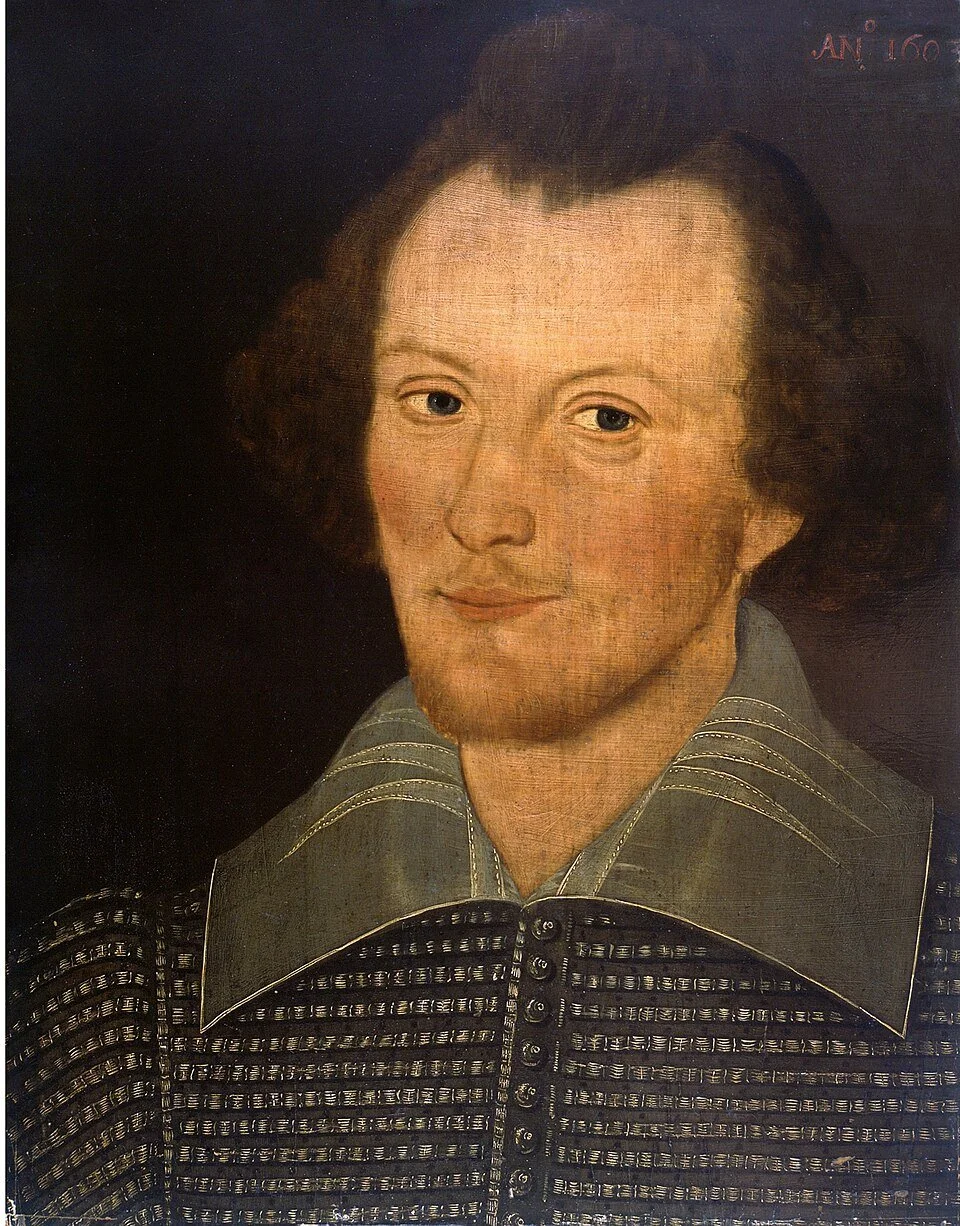
What do Shakepeare’s plays tell us about the preoccupations of the ordinary people of London? The tailors, carters, seamstresses, apprentices, lace-makers and ‘the lewdest persons in the land’ who took the afternoon off and paid a penny to stand for a couple of hours – not only to be entertained but also to be challenged and validated.
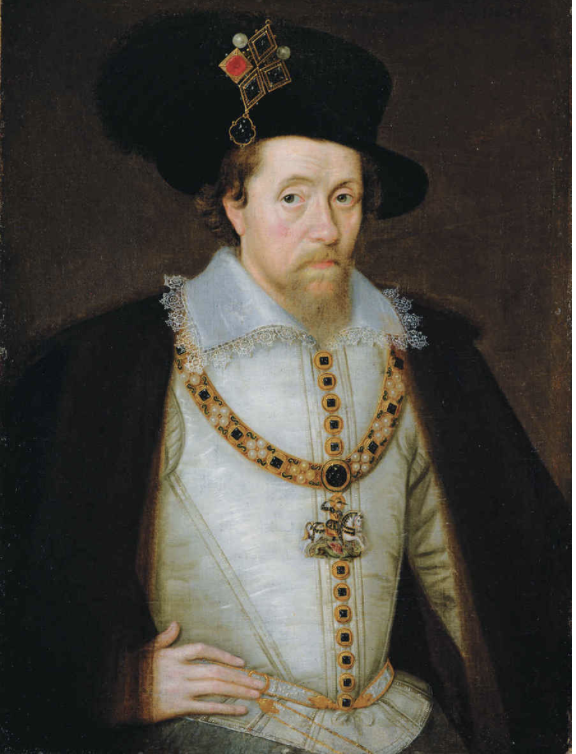
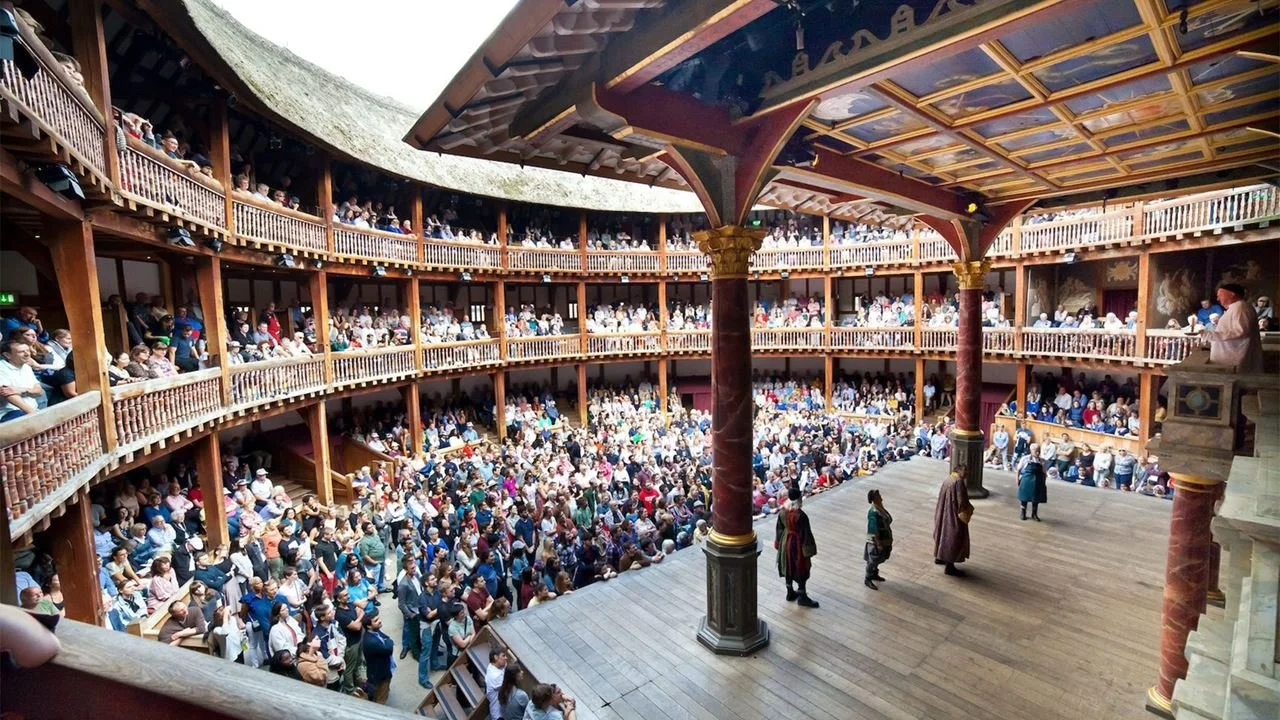
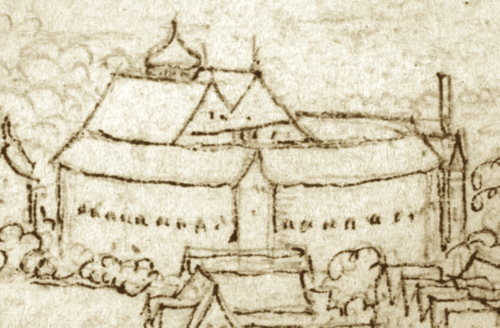
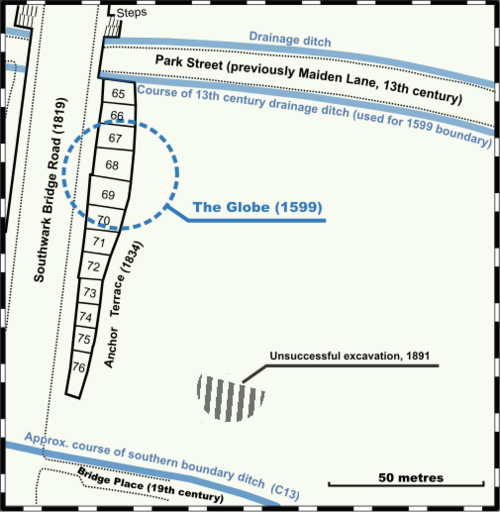
Nothing is what it seems? We, poor Londoners, paying our penny to stand at the Globe in 1606 would agree with that. With Robert Cecil’s government relentlessly pumping out fake news around the Gunpowder Plot, it’s not at all clear who the real criminals are. As Macbeth, murderer of a Scottish king, is overtaken by the evil of ambition we begin to see that our Scottish king James is also in danger. Doesn’t the ambitious scheming of his Principal Secretary threaten to reduce him to an irrelevance? Didn’t Cecil’s father, Elizabeth’s chief adviser, kill our own king’s mother, Mary Queen of Scots?
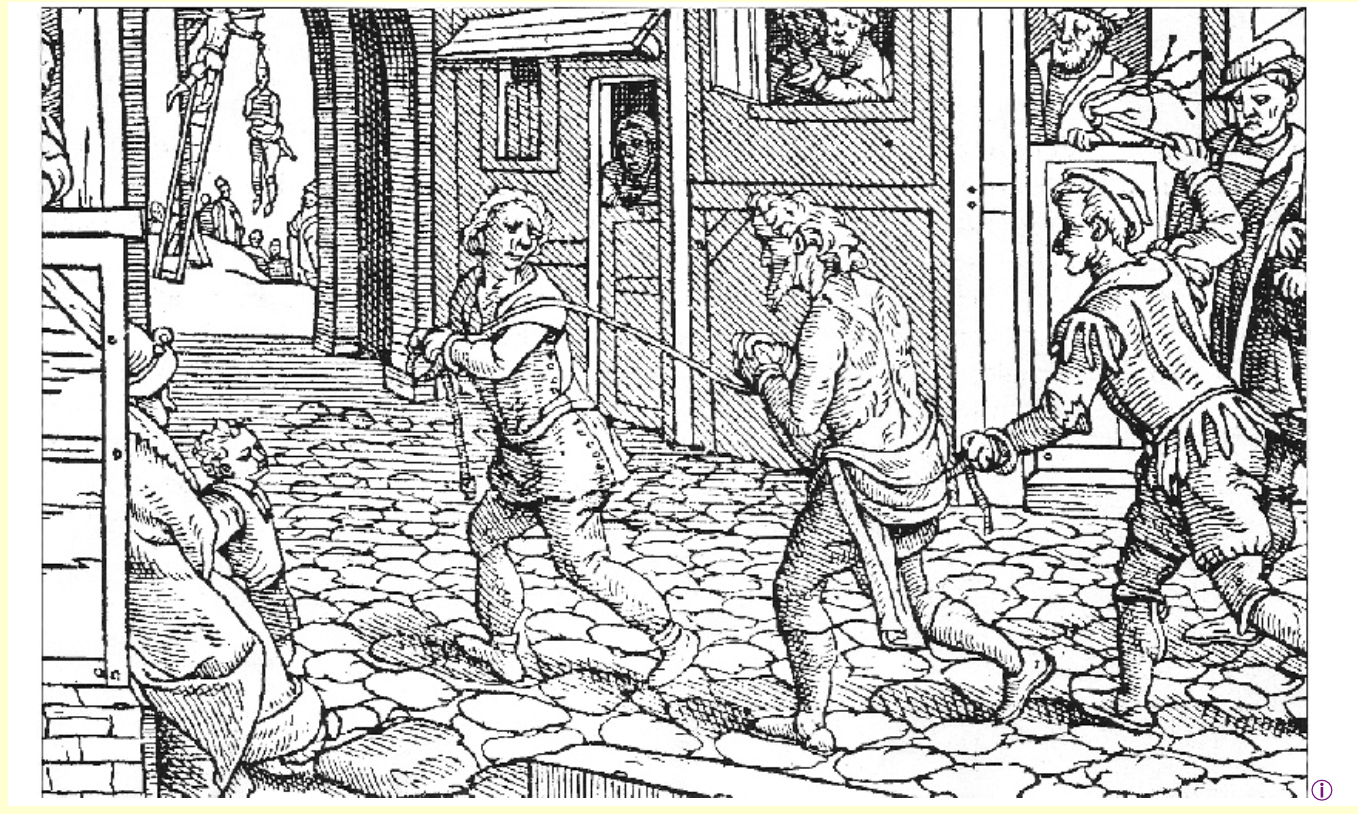
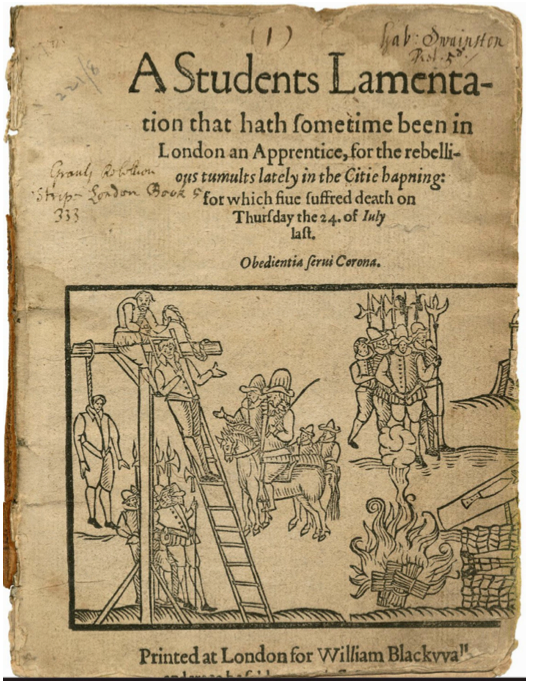
We reveal the real-life factional feud that inspired the Montagues v Capulets and which makes the groundling audience so angry. It’s London. 1595. Life is tough. It’s wet and cold and only three years ago 20% of the population died of the plague. And it’s not fair. The rich can commit murder, duelling in the streets, and get away with it. While young apprentices are hanged for arguing over the price of a fish because the Queen’s Chief Minister, Robert Cecil, is in a feud with the Lord Mayor. As the Prince says in Romeo and Juliet ‘some shall be pardoned and some punished.’ It’s an outrage.
Shakespeare confronts homelessness with his aging king, reduced to beggary. He makes the audience ask what it would be like if it was you who found yourself out of house and home, shivering and hoping someone would give you their cloak. Is it not, Shakespeare asks, an outrage to blame the poor for their condition?
The Earl of Essex, it always used to be said, was an airhead. Elizabeth’s swaggering toyboy who posed as a military genius. And yet Shakespeare took the young Earl of Essex seriously, portraying him as Henry V in early performances in 1599. It riled Essex’s rival at court, the Queen’s Chief Minister, Robert Cecil, so much that he ensured English history plays were banned.
Was Shakespeare a Catholic? We examine the evidence and then ask whether his audience would have compartmentalised the world into Protestant, Catholic or alchemical. Wasn’t their world full of magic? In his last solo play, The Tempest, a white magus, Prospero, tells the audience that it’s up to them to make good things happen, to create a ‘brave new world’ in which everyone can be reconciled. Is this Shakespeare’s leave-taking?


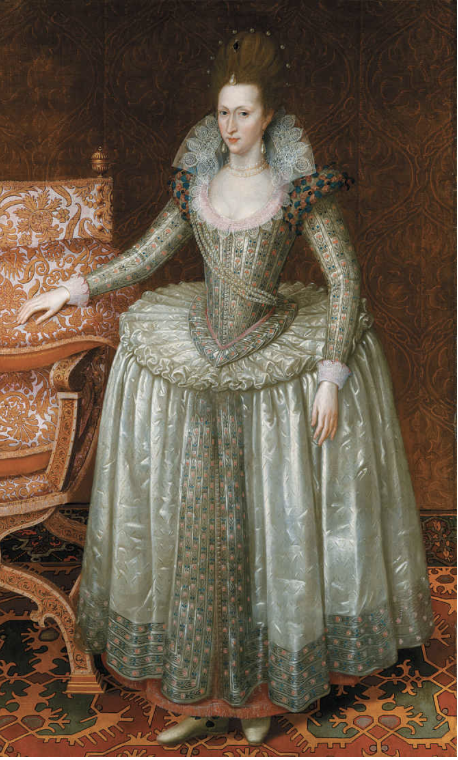

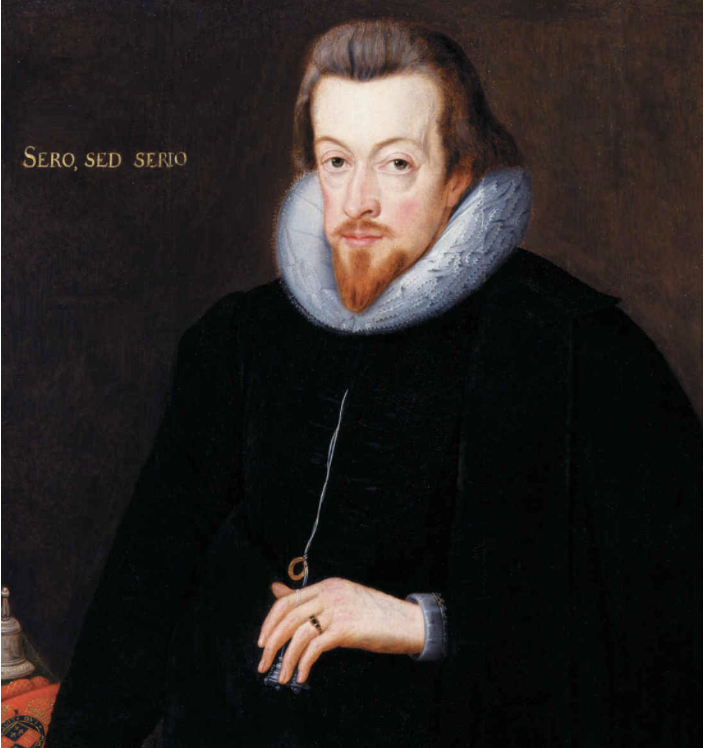
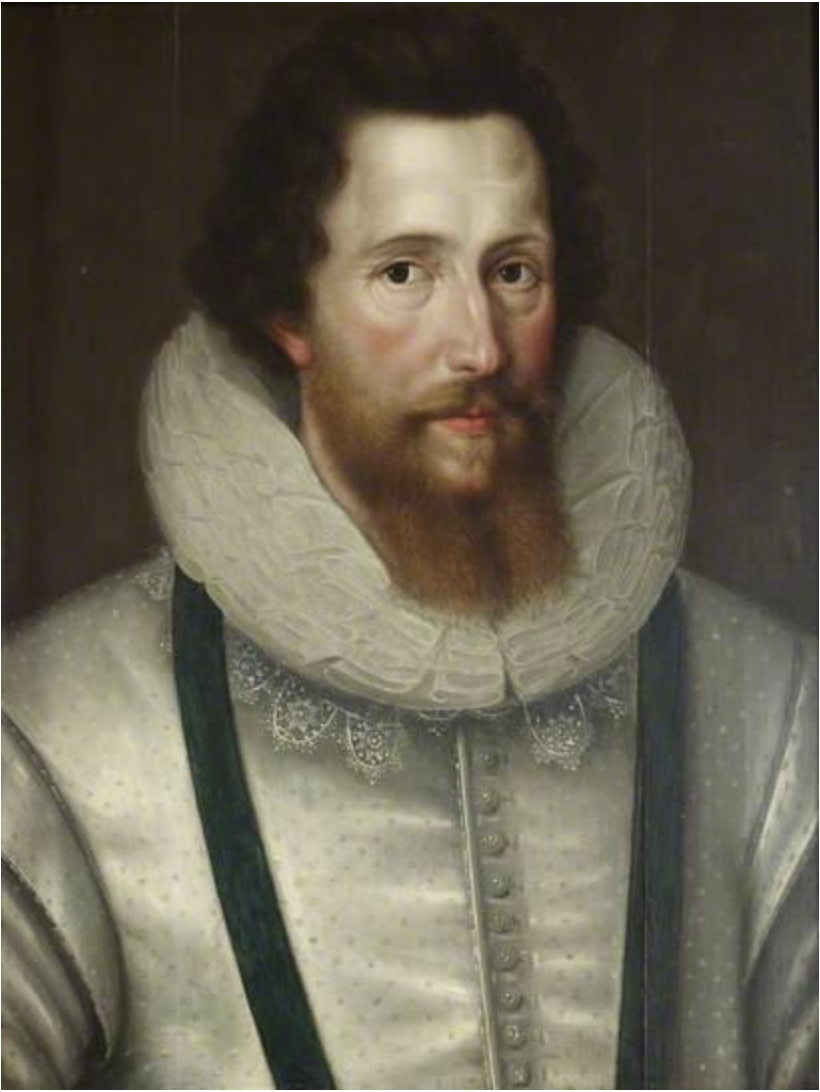
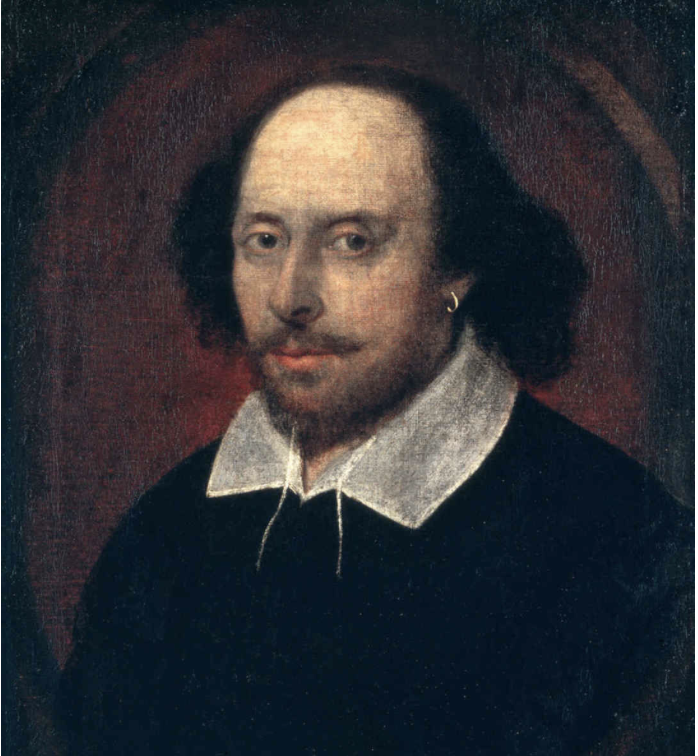

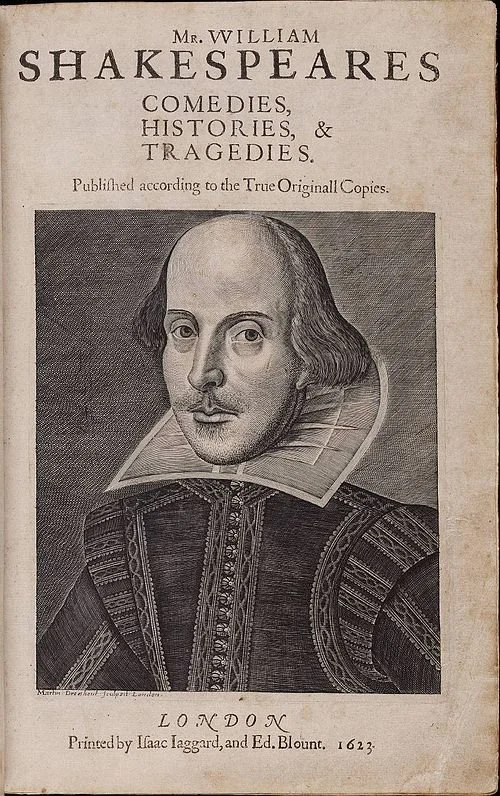
So here is another enormous subject which would take a lifetime to research completely. Once again, we have simply tried to follow some leads and put them in as enlightening a context as we could. As well as telling a compelling story.
The problem with literary scholarship
The key problem with Shakespearean scholarship is that there are two strands, the literary and the historical. And they are leagues apart. The historian embarking on reading the literary scholarship discovers they have stumbled into a parallel universe. Perhaps it’s because literary scholars are much more influenced by Marxism than historians are. Except in the most general way, historians don’t find that Marx helps us to understand this period very much. When, for example, literary scholars talk about class in any period before 1800 you know you’re in trouble. However strong your political convictions, you can’t just simplify the evidence out of existence.
If you want to get a sense of the disconnect, try David Hawkes, Shakespeare and Economic Theory (Arden Shakespeare 2015). It is perhaps the most lucid account of the so-called ‘New Economic Theory’ that infected Shakespearean studies after 2000. Drawing on an extremely narrow selection of largely Marxist historians, New Economic Theory scholars proclaimed the existence of a vast new army of landless labourers. But only by ignoring all other research on the poor. Try Hawkes’s chapter on credit and usury, which is better than the rest.
Andy Wood seems to be the favourite historian for literary scholars. He is proudly Marxist. But Wood strings together a highly unrepresentative ragbag of material (especially from his pet project, Kett’s rebellion of 1549) and concocts a thesis that agricultural enclosure was the origin of class warfare. As we see, the overwhelming weight of historical research shows that, at every level, this idea is a non-starter.
Literary scholars who rely on this kind of stuff end up thrashing around in a blind alley. Chris Fitter is perhaps the best of them. His observations on the plays are often sharp and we draw on Fitter especially when watching Romeo and Juliet. But his discussion, for example of forests, in his Radical Shakespeare: politics and stagecraft in the early career (NY, Abingdon, Routledge 2012) only shows that English scholars know too little about forest law to discuss it meaningfully.
What we need by now is a dose of deep historical research. Despite its clichéd title, Geoffrey Dyer’s Age of Transition? Economy and society in England in the later middle ages (Oxford University Press 2005) is, for example, an excellent survey of England’s economy before Shakespeare. Dyer shows that a dramatic Elizabethan transition to a cash economy, richly imagined by New Economic Theory scholars, is a nonsense. England had had a cash economy for centuries before Shakespeare.
We can also remove enclosure of agricultural lands entirely from the study of Shakespeare. We know that, in reality, there was relatively little in this period. And what there was, was mostly done by communal agreement and for sensible, agricultural reasons. Read Tamsyn Rebecca Fraser’s unpublished Sheffield PhD thesis of 2019 ‘Livestock and Landscape: Livestock Improvement and Landscape Enclosure in Late and Post-Medieval England.’ Her analysis is confirmed in, for example William C Carroll, ‘“The Nursery of Beggary”: enclosure, vagrancy and sedition in the Tudor-Stuart period’ in Richard Burt, John Michael Archer (eds), Enclosure Acts. Sexuality, Property and Culture in Early Modern England (Cornell, Ithaca and London 1994). Carroll’s ‘Language, Politics, and Poverty in Shakespearian Drama’ in Shakespeare Survey 44 (2007) pp. 17-24 is also worth reading.
So let’s take a deep breath and get to grips with some of the messy reality of hard historical evidence.
Shakespeare’s original audience.
A foundational text for us is Andrew Gurr, Playgoing in Shakespeare’s London (CUP, 3rd ed 2004). Gurr persuasively shows that most of the people who attended Shakespeare’s plays in the London theatres were poor, and a majority of them women. It transforms our understanding of the plays, and of the political culture of the London poor. It puts them at the heart of the story. Gurr’s book supersedes Ann Jennalie Cook, The Privileged Playgoers of Shakespeare’s England 1576-1642 (Princeton 1981).
Follow Gurr up with Claire A Benson’s unpublished York PhD of 2018 ‘Boundaries of Belonging in Early Modern London, 1550-1700’. It is startling, essential reading if you want to understand London in this period. Benson discovers the porters, carmen, watermen and poor women of London and demonstrates the control they had over their lives. Shakespeare’s audiences were not victims of the society and economy of their time. They played a full part in city life with assertion and pride.
Grounded with this beginning, enjoy James Shapiro’s 1599. A Year in the Life of William Shakespeare (Faber and Faber, London 2005) and The Year of Lear. Shakespeare in 1606 (Simon & Schuster, NY, London etc 2015). Taking a deep dive into one moment always makes good history and Shapiro brilliantly brings the context to life, introducing many details we don’t find anywhere else. He is always readable, whether you are an historian or not.
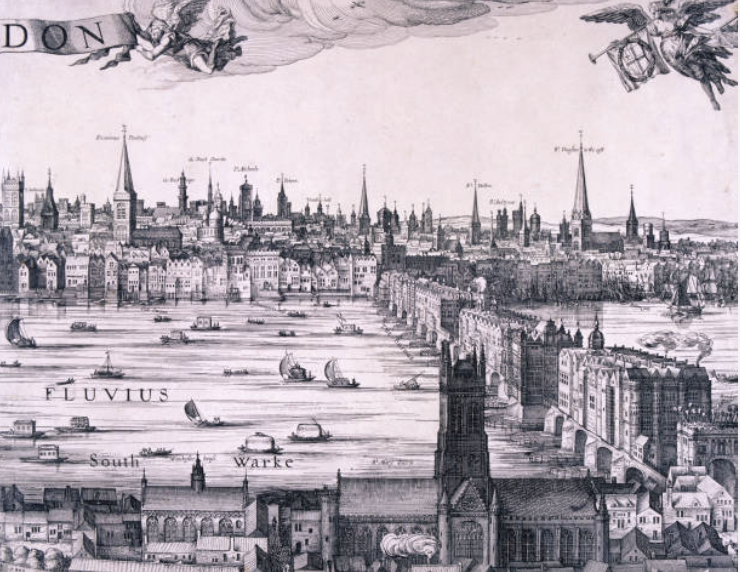
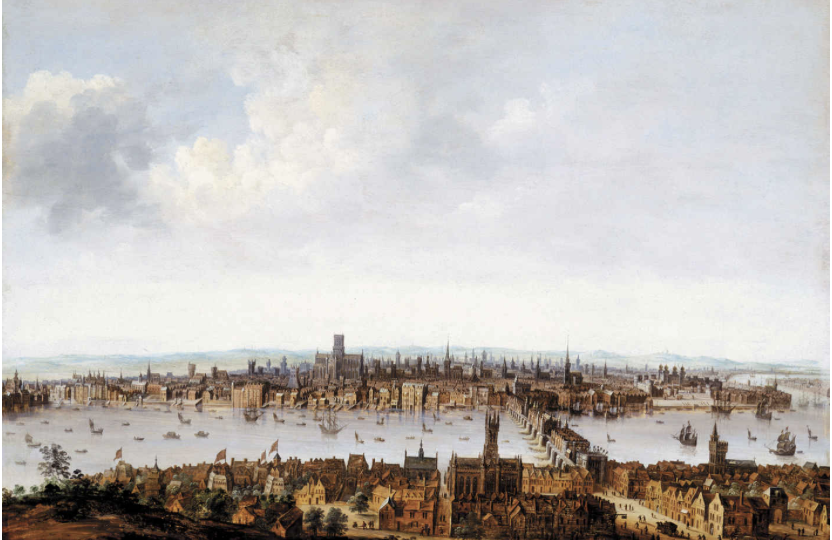
London
Hannah Crawforth, Sarah Dustagheer and Jennifer Young, Shakespeare in London (Bloomsbury, London 2014) is an excellent introduction to living in the city Shakespeare knew. Lena Cowen Orlin (ed), Material London, ca 1600 (University Pennsylvania Press, Philadelphia, 2000) has a string of useful essays on the capital. Read David Sacks on the market economy, Derek Keene’s overview of London’s commercial and population growth, Jean Howard on Westward Ho! and the city comedies, Andrew Gurr on the theatre companies and Ian Archer on the thickening of the metropolitan middle order. (We are less enthusiastic about Archer’s long-standing thesis that the civic virtue of London’s city fathers maintained the town in serene, factionless harmony. If that’s true, it would be the only such town in history.)
For more context on the Elizabethan theatre, try Scott McMillin and Sally-Beth MacLean, The Queen’s Men and their plays (Cambridge 1998). Also Lucy Clarke, ‘Public men on public stages: the performance of state authority by magistrates in popular drama, 1590-1610’ (unpublished DPhil, Oxford 2021), which is an experiment in using performance to understand the plays and in particular what they tell us about local government.
You can discover an important context for Shakespeare’s world in Neil Cummins, Morgan Kelly and Cormac Ó Gráda, ‘Living standards and plague in London, 1560–1665’, Economic History Review, 69 (2016), pp. 3-34. They analyse nearly a million burial records to chart the waves of plague that hit London in this period. Although the plague slowly tapered off after 1590, fewer than half of those born survived into adulthood. You find another context in Geoffrey Parker’s piece on the weather, ‘History and Climate: the crisis of the 1590s reconsidered’ in Claus Leggewie and Franz Mauelshagen (eds), Climate Change and Cultural Transition in Europe (Brill, Leiden and Boston, 2017) pp. 119-55. Terrible weather created eye-watering problems for food supply.
Literary scholars imagine mid-1590s London torn with riot and class conflict. However, John Walter ‘“A Foolish Commotion of Youth”? Crowds and the “Crisis of the 1590s” in London,’ The London Journal, 44 (2019), pp. 17–36 brings a dose of common sense to the subject. This was not class warfare but complex layers of dearth and politics in which the rich subsidised grain for the poor. We believe there was also a political edge to the Privy Council’s interference in City affairs in these events. But despite all these challenges, MJ Power shows that, with rapid action by the authorities, ‘Londoners seemed to be able to live through the period with comparative ease.’ See his ‘London and the control of the “crisis” of the 1590s’ in History 70 (1985), pp. 371-85.
You could follow up with Mihoko Suzuki, ‘The London Apprentice Riots of the 1590s and the Fiction of Thomas Deloney’, Criticism, 38, (1996), pp. 181-217. We don’t refer to Suzuki’s work in the series because it is not about Shakespeare but about the weaver-playwright Thomas Deloney. But it underlines the sophistication of middle-order and poorer Londoners and the subtle complexity of relationships between individuals of different economic status.
Coriolanus and London
The complex logistics of supply to London, which is the key context of Coriolanus, are vividly brought to life in Stephen Hipkin’s ‘The structure, development, and politics of the Kent grain trade, 1552–1647’, Economic History Review 61 (2008), pp. 99-139. Read also Elyssa Cheng’s ‘Moral Economy and the Politics of Food Riots in Coriolanus’, Concentric: Literary and Cultural Studies, 36 (2010), pp. 17-31. Cheng rightly concludes that the play portrays a well-ordered and successful protest about the supply of food, and that this was typical of the period. Anne Barton’s ‘Livy, Machiavelli, and Shakespeare’s Coriolanus’ in Shakespeare Survey 38 (1986) pp. 115-30 is also essential reading.
For many decades literary scholars have assumed that Coriolanus is not about London but about the Midlands Enclosure Rising of 1607. They can point, for example, to Steve Hindle, whose work is often to their taste. Read his ‘Imagining Insurrection in Seventeenth-Century England: Representations of the Midland Rising of 1607’, History Workshop Journal 66 (2008) pp. 21-61. Hindle produces evidence of enclosure in the English Midlands and the eviction of many tenant farmers. But he doesn’t notice the anti-Catholic, political motivation of the Chief Minister, Robert Cecil, and his placemen who investigated it. Nor does he ask whether this area was exceptional for its soils or agricultural practice. Accusations out of context do not make good history.
Nate Eastman has comprehensively demolished this old literary myth. Read his ‘The Rumbling Belly Politic: Metaphorical Location and Metaphorical Government in Coriolanus’ in Early Modern Literary Studies 13 (2007), pp. 1-39. Although David George accepts the old Midland Rising idea, the rest of his ‘Plutarch, insurrection, and dearth in Coriolanus’, in Shakespeare Survey 53 (2000) is better informed and helpful. See also Sandeep Kaushik, ‘Resistance, Loyalty and Recusant Politics: Sir Thomas Tresham and the Elizabethan State’, Midlands History 21 (1996), pp, 37-72. Kaushik identifies Tresham’s Catholic connections. In our series on the Gunpowder Plot we are able to show how this was exactly the Midlands milieu out of which a rising had emerged in 1605. It was a relatively harmless protest, but Cecil cynically span it into a grand Gunpowder fantasy. Do take a look at our series, Blowing up the Gunpowder Plot.
The poor and poor relief
Relations between rich and poor are central to many of the plays, including Romeo and Juliet and King Lear.
The best study of relations in this period between poor and less-poor is Marjorie Keniston McIntosh, Poor Relief in England 1350-1600 (CUP 2015). For one case study in even greater depth, look at her A Community Transformed: The Manor and Liberty of Havering 1500-I620 (Cambridge: Cambridge University Press 1991). McIntosh injects excellent research and common sense into our understanding of the Elizabethan and Jacobean poor. She shows that they were generously accepted and assisted. Class warfare it is not.
Another exemplary study is Julia Merritt The Social World of Early Modern Westminster. Abbey, court and community 1525-1640 (Manchester University Press, Manchester and New York 2005). Merritt’s examination of poor relief further demolishes the literary nonsense of an emerging abyss between rich and poor. It’s a brilliant demonstration of the fundamental importance of local history.
Also read Philip Baker and Mark Merry, ‘“The poor lost a good Friend and the parish a good Neighbour”: the lives of the poor and their supporters in London’s eastern suburb, c.1583–c.1679’ in Matthew Davies and James A Galloway (eds), London and Beyond. Essays in honour of Derek Keene (Institute of Historical Research, London 2012). Baker and Merry show, by tracing the backgrounds of individual paupers, that the authorities in a poor part of London simply did not discriminate between ‘deserving’ and ‘undeserving’.
Don’t now miss Mi-Su Kim, ‘Men on the road: beggars and vagrants in early modern drama (William Shakespeare, John Fletcher, and Richard Brome)’ (unpublished PhD, Texas A&M 2004). It is a revelation. Kim allows us to follow Shakespeare as he explores the problem of vagrancy in King Lear.
Paul A Fideler, ‘Poverty, policy and providence: the Tudors and the poor’ in Paul A Fideler and TF Mayer (eds), Political Thought and the Tudor Commonwealth (London and NY 1992) adds a footnote about William Perkins, a contemporary commentator on the poor law, and his book Cases of Conscience, which appeared in the same year as Lear.
The history plays and contemporary political crisis
By a very long way, the best approach to Shakespeare’s history plays is Peter Lake’s How Shakespeare Put Politics on the Stage: Power and Succession in the History Plays (New Haven 2017). Anything by Lake on Shakespeare is worth reading.
The Earl of Essex is central to this drama. Ignore all the old accounts (and anything you find on-line.) Instead read Alex Gajda, The Earl of Essex and late Elizabethan Political Culture (OUP 2012) and follow her references. Anything by Paul Hammer will also be excellent. Lake, Gajda and Hammer also tell you all you need to know about the once-fashionable theory of the ‘monarchical republic’ that you will still find in many textbooks.
Markku Peltonen, The Duel in Early Modern England. Civility, Politeness and Honour (Cambridge 2003) fills in the background about duelling. It turns out to be important for Romeo and Juliet, and also as a challenge to Essex’s code of chivalry. For which also see Brian Patrick Merry, ‘Fair and Foul: The Politics of Chivalry and Pragmatism in Shakespeare’s English History Plays’ (Unpublished PhD, Drew University 2012).
Merry Wives, All’s Well that Ends Well, gender and marriage
A fragment of a letter, preserved by accident in the binding of a book at Hereford Cathedral, has recently been discovered by Professor of English, Matthew Steggle, of the University of Bristol. It is addressed to ‘good Mrs Shakespeare’ and appears to show both of the Shakespeares (William and his wife Anne) living together in central London at some point in the decade 1600-1610. The letter had been used in the binding of a book, a common practice, possibly connected with the printing shop of Richard Field, a friend of Shakespeare’s, close to Trinity Lane. Steggles says it seems to show Anne being ‘involved with her husband’s money affairs and social networks’ in London, since the letter is a request for Mrs Shakespeare to override her husband and provide money for a fatherless orphan boy, John Butts. She stands by her husband. See details.
Phil Withington lucidly sets out both the urban and the gender context of Merry Wives in his excellent ‘Putting the city into Shakespeare’s city comedy’ in D Armitage, C Condren and A Fitzmaurice (eds), Shakespeare and Early Modern Political Thought (Cambridge University Press 2009). John M Adrian gives us the local Windsor background in his Local Negotiations of English Nationhood 1570-1680 (Palgrave Macmillan NY and Basingstoke 2011).
Mary Floyd-Wilson, Occult Knowledge, Science, and Gender on the Shakespearean Stage (CUP 2013) is excellent on the unseen forces in which all Elizabethan and Jacobean people believed. It significantly shifts the way in which we watch the plays. Floyd-Wilson is particularly provocative when it comes to the women and the dangerous forces they were widely thought to embody.
For the uncertainty that now surrounds the understanding of marriage that Shakespeare would have shared, read Frances Dolan, ‘Shakespeare and Marriage: an open question’ Literature Compass 8/9 (2011), pp. 629-34
AG Harmon adds a note about Shakespeare’s use of legal language in ‘"Lawful Deeds": The Entitlements of Marriage in Shakespeare's All's Well That Ends Well’, in Logos: A Journal of Catholic Thought and Culture, 4 (2001), pp. 115-142.
Macbeth
Luke Taylor SJ, ‘Macbeth’s body. An anatomy of evil’ in David Torevell, Brandon Schneeberger and Luke Taylor SJ, Exploring Catholic Faith in Shakespearean Drama Towards a Philosophy of Education (Routledge, NY and London 2025), pp. 17-34 is a brilliant analysis of Macbeth, revealing the way Shakespeare uses contemporary metaphors of the body to chart Macbeth’s descent into murder and madness. We connect it to the Gunpowder Plot, which had played out in the months before Macbeth first appeared. But not in the way you might expect.
Religion
Studies of religion at the level of the poor parishioners in this period are rare. For Catholics there is, at least, Marie Rowlands (ed), English Catholics of Parish and Town 1558-1778. (The Catholic Record Society, London 1999). The essay on London by Michael Gandy is certainly worth a read. Then take a look at Geoffrey Marsh, Living with Shakespeare. Saint Helen’s Parish, London 1593-98 (Edinburgh University Press 2021). Marsh hosts a deeply researched and lively stay in one of the parishes in which Shakespeare lived, including cases of bewitchment and exorcism and the role of the queen’s astrologer Simon Foreman. Magic was never far away. Marsh also puts the lid on speculation that Shakespeare might have been a Catholic. Another win for local history.
If you want to pursue Shakespeare’s relationship with Catholicism, start with John R Yamamoto-Wilson’s summary of the evidence in his ‘Shakespeare and Catholicism’, in Reformation and Renaissance Review 7 (2005), pp. 347-61.
At some stage you will need to tackle Richard Wilson, Secret Shakespeare. Studies in Theatre, Religion and Resistance (Manchester University Press, Mc and NY, 2004). Wilson gets carried away identifying possible Catholics, linking them vaguely to Shakespeare and then announcing the grand conclusion that the playwright must have been Catholic too. By now Wilson’s cascading assumptions have collapsed into conspiracy theory. As we point out in our series, it would have been surprising if a middle-order man from the Midlands had not known plenty of Catholics. Many at court would have found it politically convenient to point the finger at Shakespeare. But nobody did. However, Wilson’s account of The Tempest and a possible link with a marriage between Prince Henry and the Duke of Tuscany’s daughter is still worth a look.
Robert Bearman, ‘John Shakespeare: a papist or just penniless?’ in Shakespeare Quarterly 56 (2005), pp. 411–433 efficiently disposes of the old story that a Catholic will, supposedly found in the roof of Shakespeare’s Stratford house in the 18th century had belonged to his father. Bearman shows that, if it ever existed, it was a forgery.
The question of Shakespeare’s religious convictions is anyway much bigger than this. Many years ago Frances Yates raised the possibility that Shakespeare was sympathetic to hermeticism. Her Occult Philosophy in the Elizabethan Age (Routledge & Kegan Paul, London 1979) is a classic. To call this ‘occult philosophy’ magical is an uncomfortable but perhaps forgivable shorthand. An alchemical understanding of the universe is more accurate, but requires a whole lot of difficult reading to understand.
Read Jane Everingham Nelson, Shakespeare and Religio Mentis. A Study of Christian Hermetism in Four Plays (Brill, Leiden and Boston 2022), which sets Shakespeare’s religious world in the context of magical beliefs stretching back to the ancient world. Also look up Rana Banna’s remarkable ‘“Awake your faith”: word-magic in Shakespeare’s late plays’ (Unpublished PhD, London 2024). Banna explores Shakespeare’s use of spells, which she interprets as a nostalgia for an older, kinder magical thinking that is being lost. Finally, Mary Floyd-Wilson’s Occult Knowledge, Science, and Gender on the Shakespearean Stage (CUP 2013) is, as we have seen, excellent both on magic and contemporary understanding of women.